Cheerful, and it is not a marketing word
The breed standard actually uses the word. They are people-oriented, playful well into adulthood, and generally easy with strangers and other dogs.
Bichon Frise · two months old
He is two months old, he is white, and he made it home.
He arrived with a ten-year-old big brother already in the house. The photographs run the length of this page, each one next to the part of it they belong to.
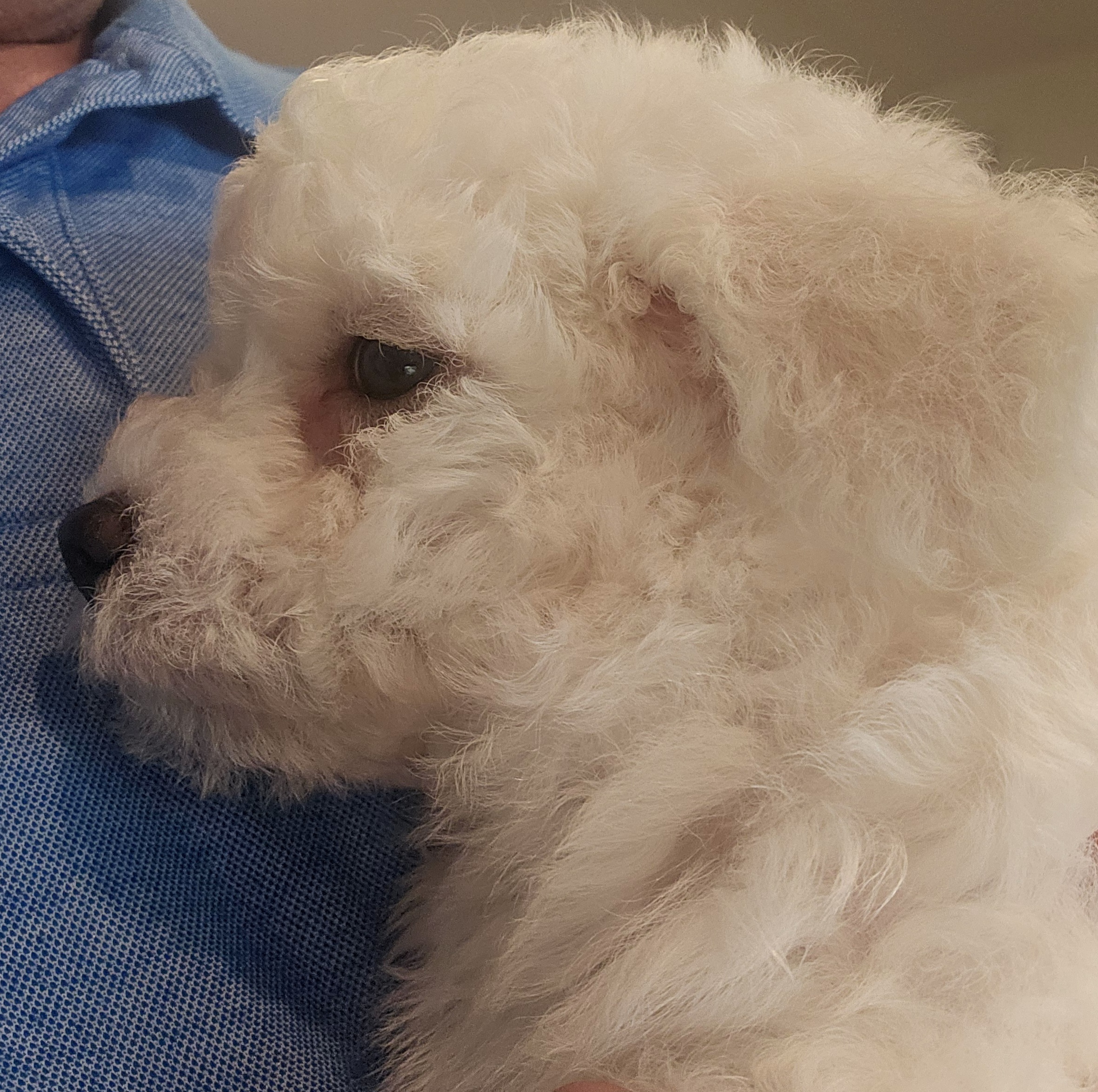
In the order they happened, oldest first. Phone snapshots, each one dated. More of them sit further down the page, beside the parts of it they belong to.
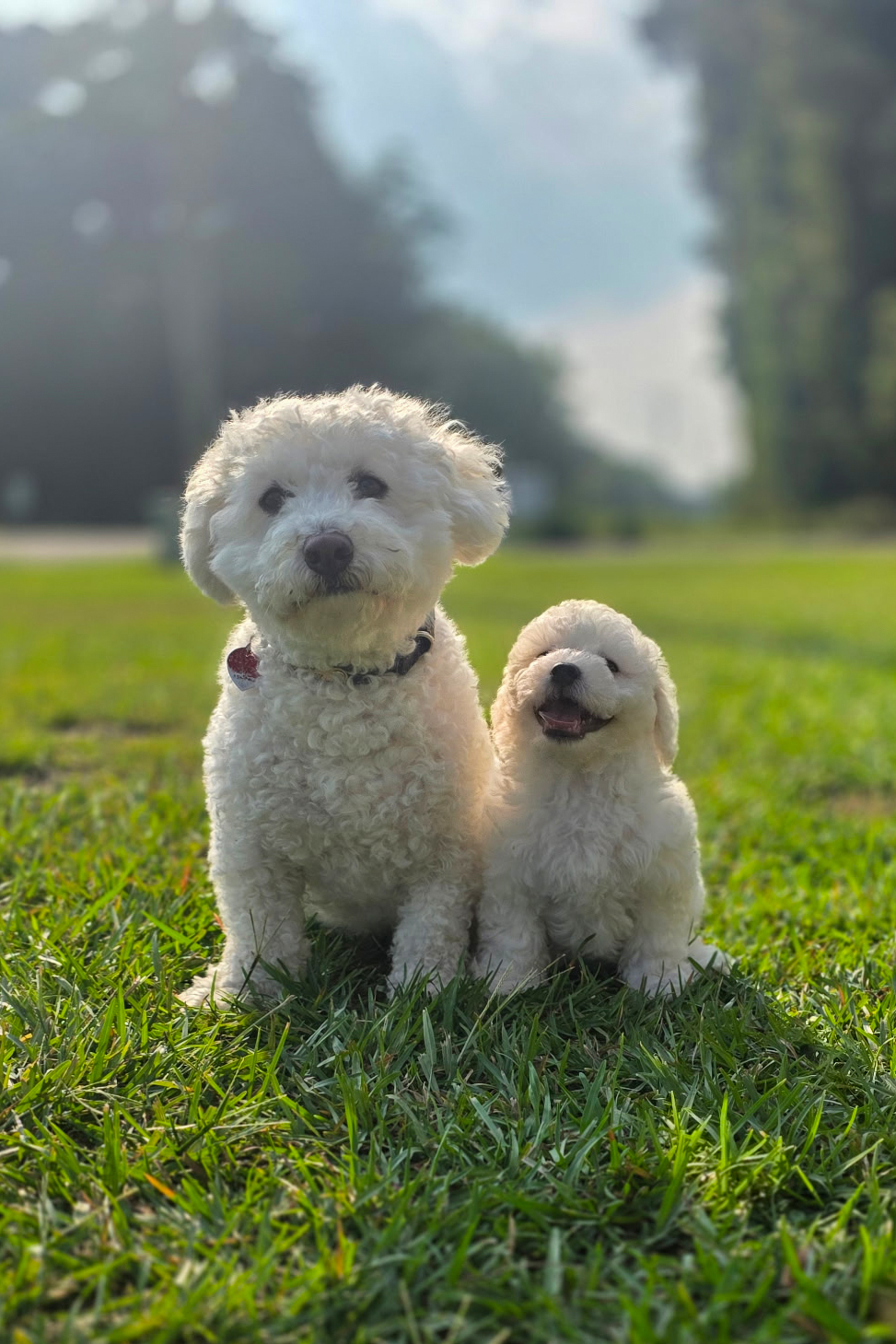
Stanley and Mochi, sitting still at the same time.
Phone snapshot ·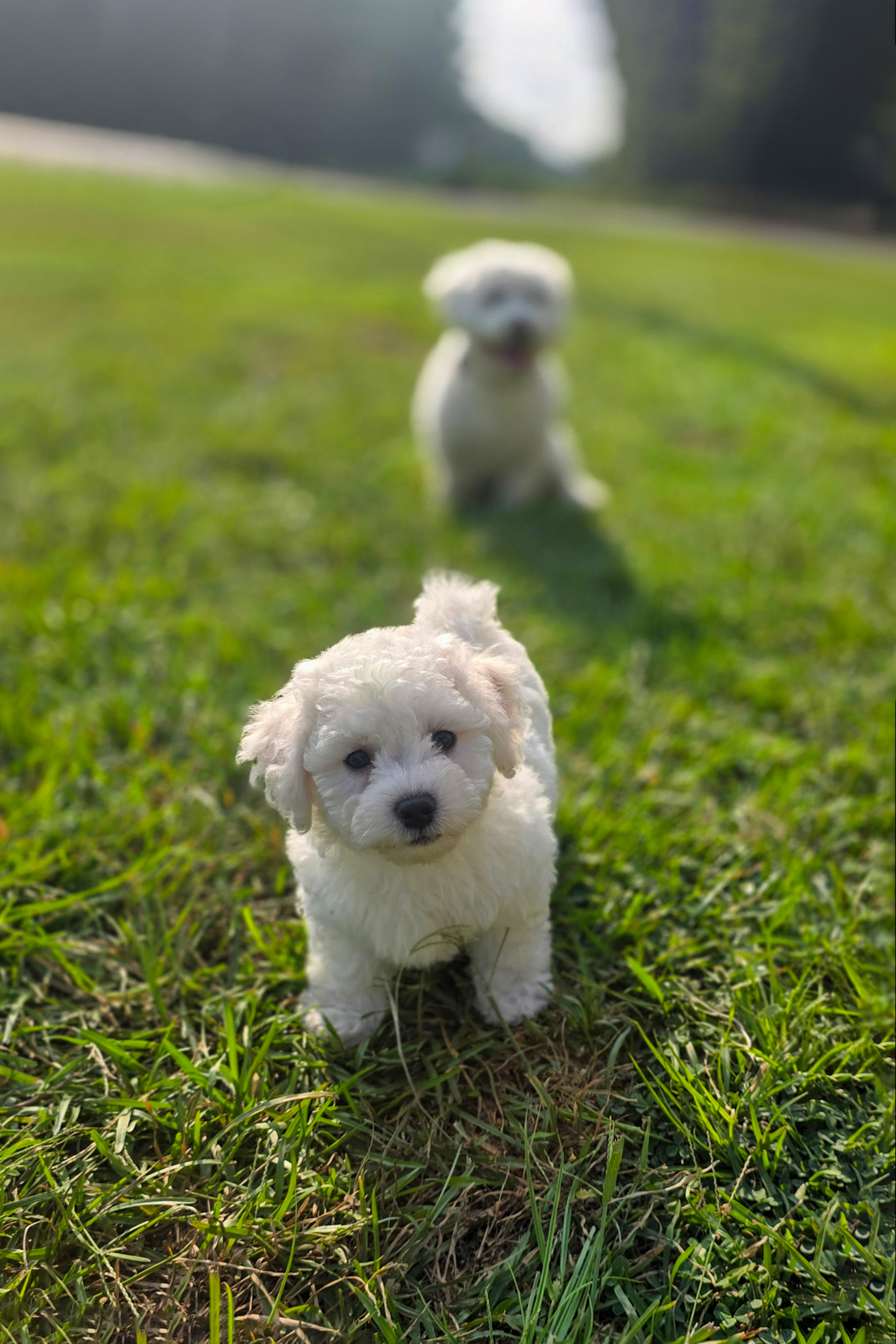
Mochi arriving first.
Phone snapshot ·Everything on this card is a fact about Mochi. Everything further down that describes the breed is about Bichon Frises in general, and is marked as such.
Everything from here down is about Bichon Frises in general — useful if you have landed here looking up the breed, and not a set of measurements taken on this particular puppy.
A sailor's dog that became a court dog, lost the court, and went to work in a circus. The last part explains more about the temperament than the first two.
This is the part people underestimate. A Bichon Frise does not shed onto your floor — it keeps its dead hair in the coat, where it felts. The grooming schedule is not vanity; it is the maintenance the coat requires to stay comfortable.
| What | How often | Why it matters |
|---|---|---|
| Brushing and combing to the skin | Most days | A double coat that does not shed traps its own dead hair. Brushing only the surface leaves a felted layer underneath that a groomer will have to shave off. The comb has to reach skin or it has not happened. |
| Professional grooming | Every four to six weeks | The rounded 'powder puff' outline is a scissored trim that grows out fast. Left too long between appointments, the coat mats and the humane answer is a short clip, not a rescue brush-out. |
| Face and eye cleaning | Daily-ish | White faces show tear staining. It is mostly cosmetic, but a persistently wet face is a skin problem waiting to start, and a sudden change in discharge is worth a vet's opinion rather than a wipe. |
| Ears checked and dried | Weekly, and after every bath | Drop ears plus a dense coat plus moisture is the standard recipe for otitis. Hair in the canal and water left after a bath are the two usual culprits. |
| Nails | Every two to three weeks | Small dogs on soft flooring do not wear nails down. Overlong nails change how the foot loads and are genuinely uncomfortable. |
| Teeth | Daily brushing is the real answer | Periodontal disease is the most common health problem in small breeds, and it is the one owners most reliably underestimate. |
Including the two things that most often surprise people, which are the two things worth knowing before you get one.
The breed standard actually uses the word. They are people-oriented, playful well into adulthood, and generally easy with strangers and other dogs.
The flip side of a dog bred to be with people is separation anxiety, which is common in the breed. It is much easier to prevent with short, boring, unemotional absences from the start than to fix later.
Small breeds have small bladders and a well-earned reputation for slow housetraining. This is the single thing new Bichon owners are most often unprepared for. It is a schedule problem, not a stubbornness problem.
They shed very little, which helps some allergy sufferers. But the allergen is largely dander and saliva, not hair, so 'hypoallergenic' overpromises. Anyone allergic should meet the dog before committing to one.
A watch-list, not a diagnosis and not a prediction. Most Bichon Frises live long, healthy lives; these are simply the things the breed is known for, so they are worth recognising early.
| Condition | Worth knowing |
|---|---|
| Skin allergies (atopic dermatitis) | The best-known Bichon problem. Itching, licked paws, recurring ear infections. Usually managed rather than cured, and worth catching early. |
| Patellar luxation | A kneecap that slips out of its groove. Common across small breeds. Often shows up as a skip in the back leg for a step or two. |
| Bladder stones | Bichons are over-represented. Straining, frequent small urinations or blood are an urgent call, not a wait-and-see -- a blocked dog is an emergency. |
| Dental disease | Small mouths, crowded teeth. The reason the brushing line above is not filler. |
| Eyes (cataracts, PRA) | Both appear in the breed. Responsible breeding programmes screen for them. |
None of this is veterinary advice. If something looks wrong with your dog, ask a vet rather than a website.
Solid rows have happened. Dashed rows have not — they are what a Bichon Frise puppy typically has ahead of him, not a diary written in advance.
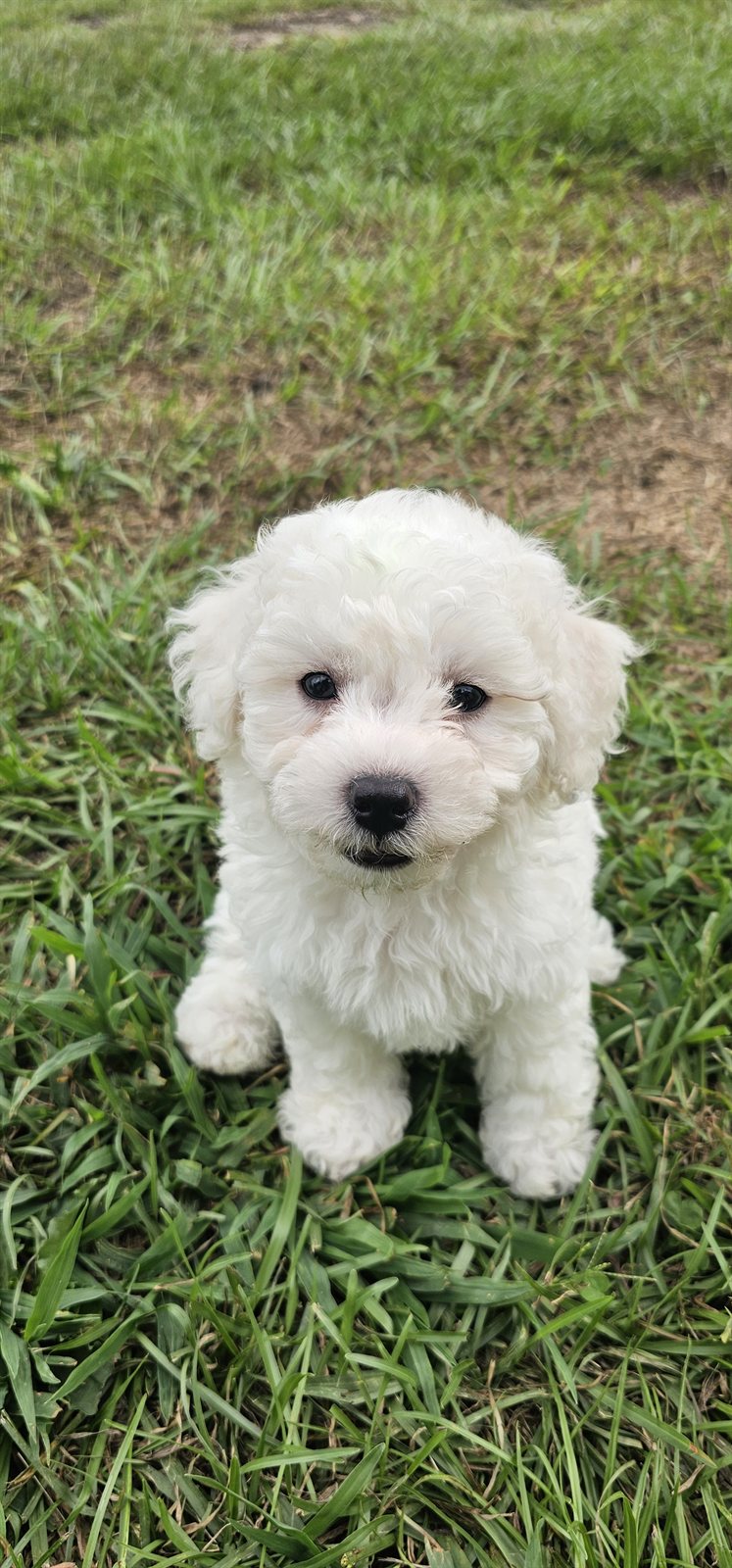
Stanley is 10. He was here first, and the company is named after him.
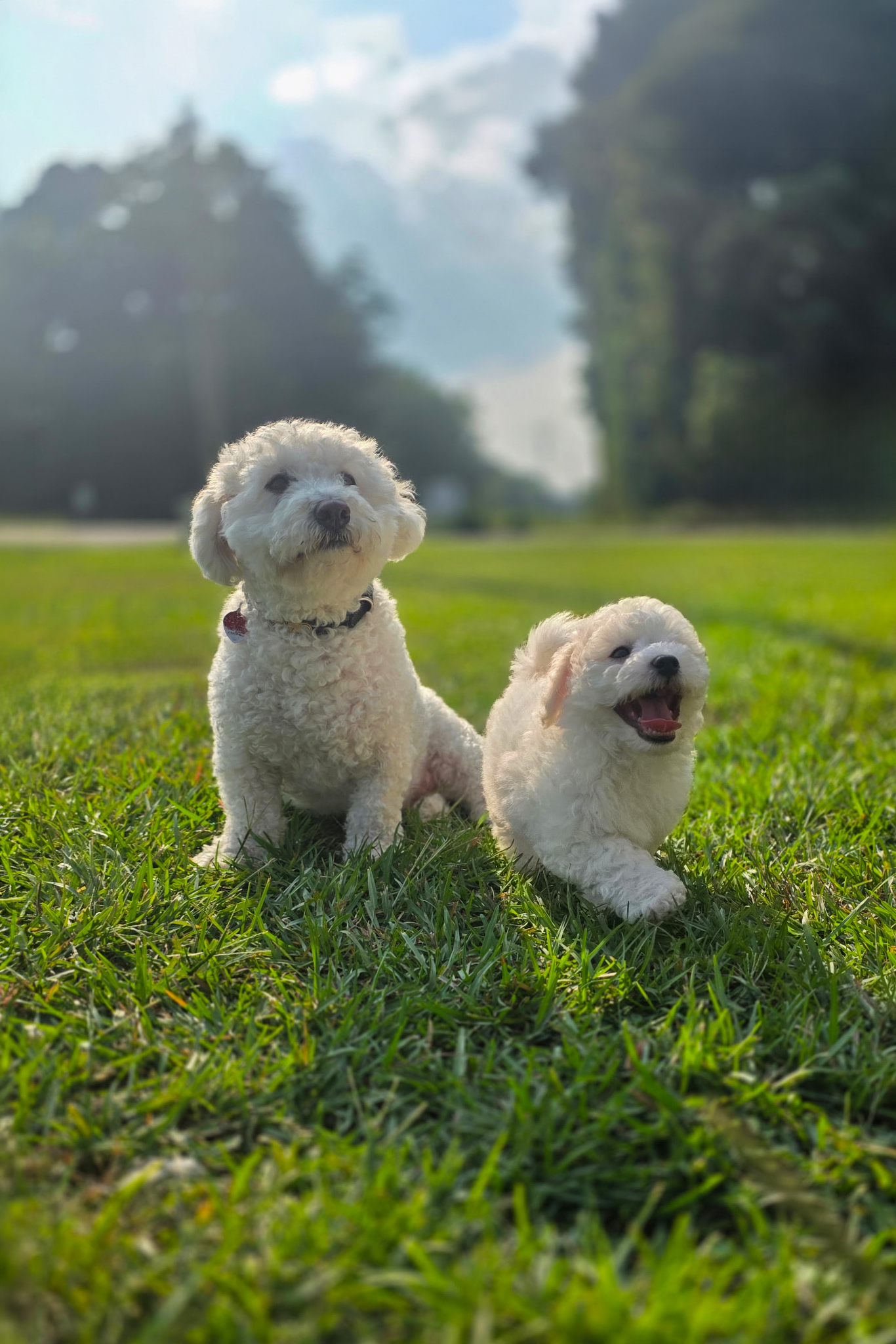
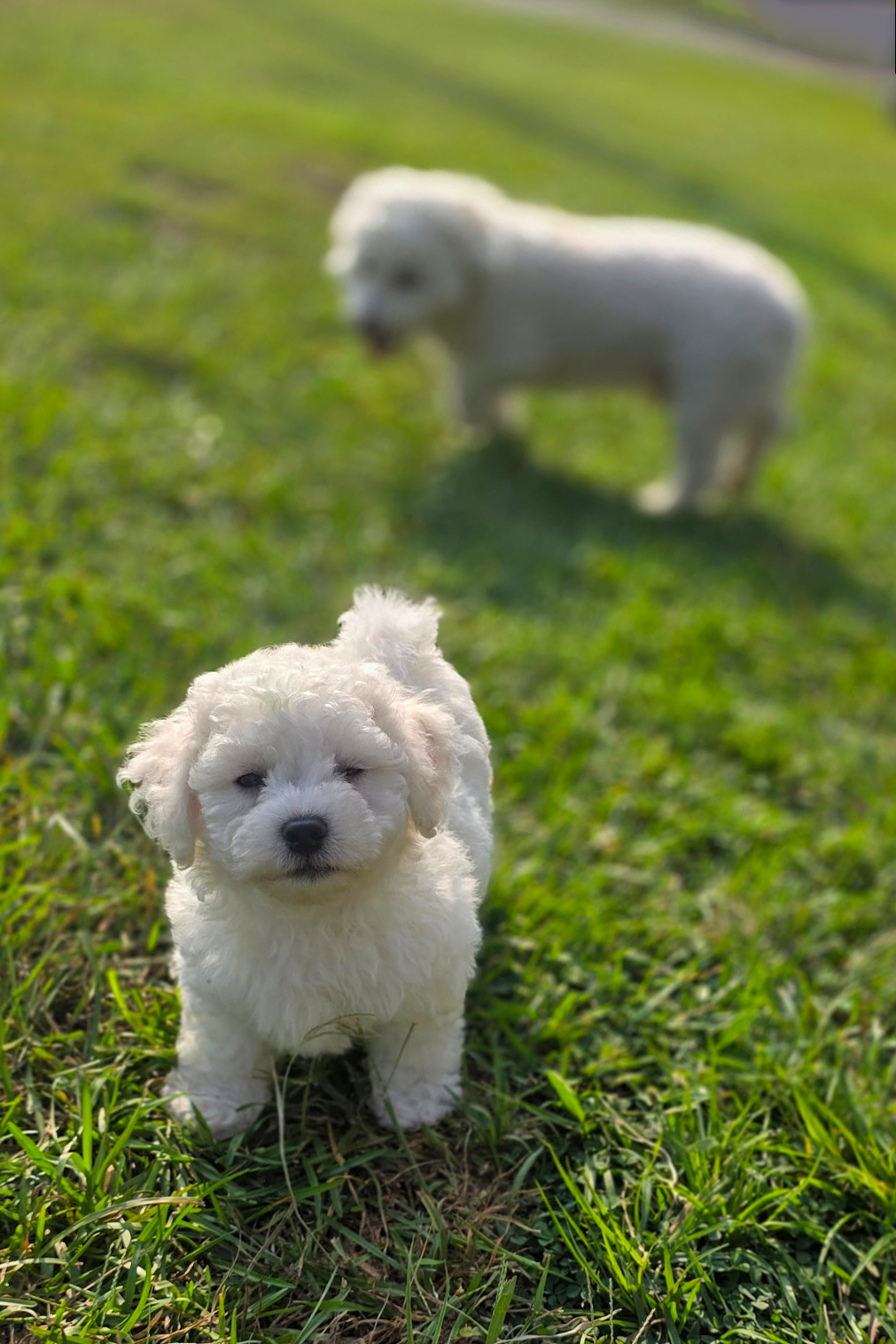
A ten-year-old dog and an eight-week-old puppy are not the same animal living in the same house, and the older one did not ask for any of this. Stanley gets to set the terms.
stanleystudios.llc is his.
This is a family page about a dog. It is not a product, not a shop and not a K-12 service. There is nothing to buy here, no newsletter, no form, and nothing collected about you.
There are 6 photographs of Mochi on it, taken in July and August 2026. The breed material is general and true of Bichon Frises, not measurements taken on him.
He is two months old. More photographs are coming, and they will be dated when they arrive.